
Seamless Integrity for Long-Term Performance
Joints between concrete slabs continually expand and contract. Without proper filling and sealing, these joints become collection points for dirt, debris, chemicals, and moisture—leading to deterioration, contamination, and safety hazards.
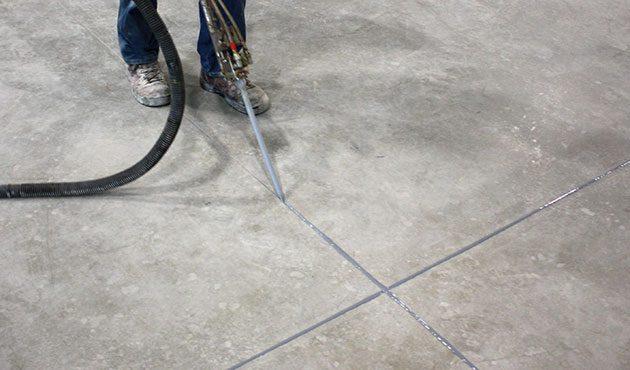
The PCS Approach
We don't just fill joints—we engineer solutions. Our process includes joint evaluation, cleaning, preparation, priming (when required), and proper application of the specified system. Special attention is paid to floor drains and transitions to eliminate feathered edges that can fail prematurely.
Why Joint Filling Matters
- Prevents debris accumulation
- Stops moisture intrusion
- Eliminates trip hazards
- Maintains hygienic conditions
- Protects joint edges from damage
- Provides smooth transitions for wheeled traffic
Application Expertise
Proper joint filling requires understanding:
- Joint movement characteristics
- Loading conditions
- Chemical exposure
- Temperature ranges
- Aesthetic requirements
System Options
We offer rigid and flexible joint filling systems engineered for specific applications:
- Epoxy Systems: For joints with minimal movement in climate-controlled environments
- Polyurea Systems: For joints requiring flexibility and rapid cure times
- Semi-Rigid Systems: Balancing durability with some movement accommodation